
How do bearings support both light and heavy industries?
The Ubiquitous Rotation Revolution
From 240-ton wind turbine main shafts to hair-thin dental drills, from the -269°C environment of space to the 1500°C of casting production lines, bearings, with their near-zero coefficient of friction, quietly support every rotation in modern industry. These seemingly simple steel components are in fact the perfect culmination of physics, materials science, and precision engineering.
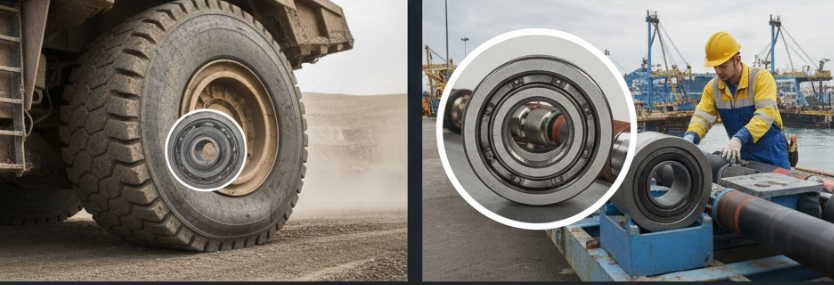
Chapter 1 Heavy Industry: Ballet Dancers on the Back of a Giant
1.1 Wind Power Giants: A 5-meter Diameter "Planetary System"
The main shaft bearing of a modern 10-megawatt wind turbine weighs 15 tons and has a diameter exceeding 5 meters. Inside this giant steel ring, a precise "planetary motion" unfolds:
Rotation: The main shaft rotates at 12-20 rpm.
Revolution: Rollers with a diameter of 80 millimeters circulate on raceways.
Oscillating: Self-aligning bearings compensate for the tower's 0.3° elastic bending.
Engineering Miracle: The surface roughness of these bearings is only 0.1 micrometers, smoother than a mirror. However, they withstand dynamic loads as high as 5000 kN, equivalent to 500 cars simultaneously suspended at a single contact point of the bearing.
1.2 Steel Torrent: "Magma Walkers" on the Continuous Casting Line
On the continuous casting production line of a steel plant, sector-shaped bearings operate only 30 centimeters above 900°C slabs. They use a special material—M50 tool steel—that maintains its hardness even at red-hot temperatures.
Thermodynamic Magic: These bearings employ a unique labyrinthine cooling channel system. The internally circulating cooling oil heats up from 40°C to 120°C in 0.2 seconds, instantly removing the instantaneous high heat from the contact point. This cooling system keeps the bearings cool on the "edge of magma," achieving a lifespan of 6000 hours, equivalent to withstanding 200 million thermal shock cycles.
1.3 Deep in the Mine: An 8-Meter Diameter "Friction Revolution"
A ball mill in a Chilean copper mine uses the world's largest slewing bearing—8.2 meters in outer diameter, composed of 256 balls, each 120 millimeters in diameter, supporting a drum loaded with 400 tons of ore.
Load Dance: As the drum rotates, the load is not transmitted uniformly between the balls, but rather forms dynamic stress waves. The most amazing discovery is that this non-uniform distribution actually increases bearing life by 23%—a counterintuitive engineering gift.
Chapter 2 Light Industry: Nanoengineering at the Micrometer Scale
2.1 Chip Manufacturing: Atomic-Level Rotational Precision
The vacuum molecular pump bearings of lithography machines rotate at 30,000 rpm in a vacuum of 0.0001 Pa, with a vibration amplitude of less than 0.1 nanometers—smaller than the diameter of a silicon atom.
A Vacuum Physics Marvel: In extremely high vacuums, traditional lubricants evaporate and contaminate the optical path. Engineers' solution is magnetic levitation combined with solid-state lubrication—using a calcium molybdate coating for lubrication, and electromagnetic fields to precisely control position, achieving zero-contact rotation. The non-repetitive radial runout of this bearing is only 8 nanometers, equivalent to a control deviation of less than one-thousandth the thickness of a human hair on a turntable the size of a football field.
2.2 The Heart of Textiles: A Silent Symphony of 20,000 RPM
The spindle bearings of modern vortex spinning machines produce less than 45 decibels of noise at 20,000 rpm, quieter than a library. The secret lies in ceramic hybrid bearings—silicon nitride balls have a density 40% lower than steel, reducing centrifugal force by 60%.
Materials Science Breakthrough: Ceramics have a 50% higher elastic modulus than steel, meaning they deform less under the same load. But the real innovation lies in surface engineering—the raceways undergo ion implantation to create a diamond-like carbon coating only 2 micrometers thick, reducing the coefficient of friction to 0.05 and extending lifespan by eight times.
2.3 Food Packaging: A "Forbidden Zone" in Aseptic Environments
The cam indexing bearings in aseptic beverage filling lines must operate in hydrogen peroxide vapor while withstanding 300 impact loads per minute.
Chemical Protection Art: These bearings are made of martensitic stainless steel that has undergone integral quenching and electropolishing to eliminate all microscopic pits (where bacteria can hide). The most ingenious element is the special lubricating grease—based on perfluoropolyether with added boron nitride solid additives—which resists chemical corrosion and remains stable under boundary lubrication conditions.
Conclusion: The Invisible Backbone of a Rotating Civilization
The evolutionary history of bearings is an epic of humanity's control over friction and taming of rotation. From the primitive rollers used in ancient Egypt to move massive stones with logs to today's nanometer-precision magnetic levitation bearings, each breakthrough has unleashed new productivity.
In heavy industry, bearings are amplifiers of power, enabling humans to rotate rotors weighing hundreds of tons; in light industry, they are guardians of precision, allowing circuits on chips to be as fine as 3 nanometers. This seemingly simple mechanical component is actually the intersection of classical mechanics and quantum physics, macroscopic manufacturing and microscopic perception, metal fatigue and intelligent early warning.
The next time you ride a high-speed train, use your smartphone, or open a refrigerator, remember—it is those precision steel rings silently rotating in the dark that support this rotating civilization. And their evolution has never stopped: from friction reduction to intelligence, from execution to perception, from tool to partner. The story of bearings is an eternal epic of humanity transforming the laws of nature into the driving force of civilization.
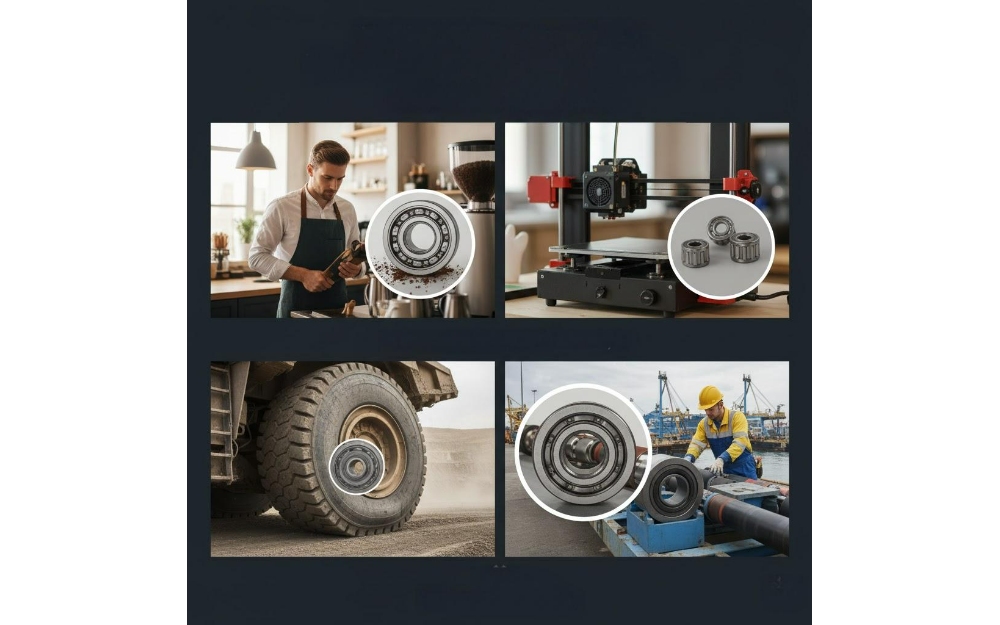 How do bearings support both light and heavy industries?
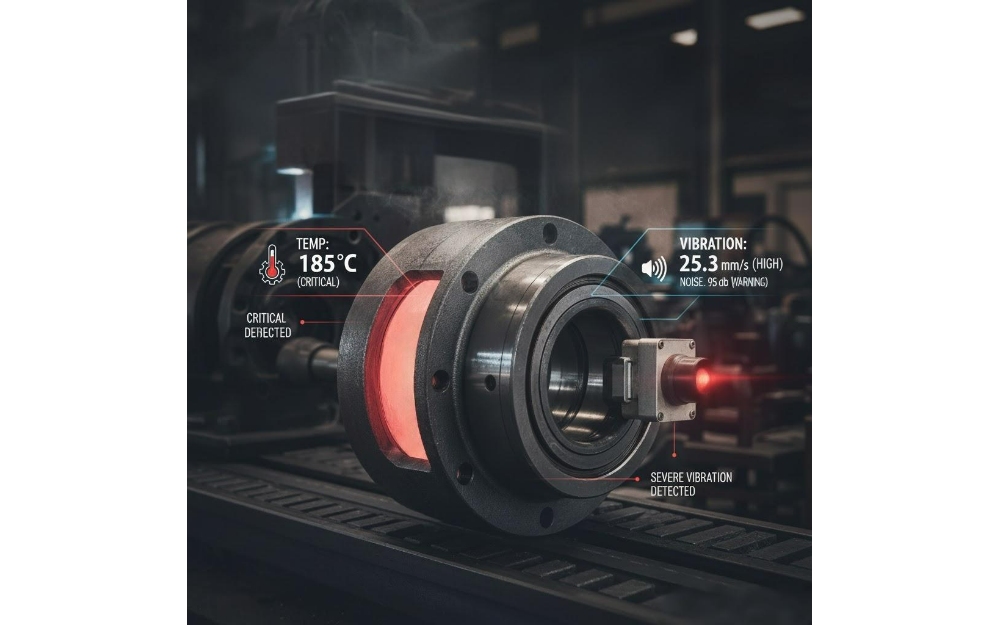 Abnormal temperature rise and vibration noise: Interpreting early warning signals of bearing housing failure!
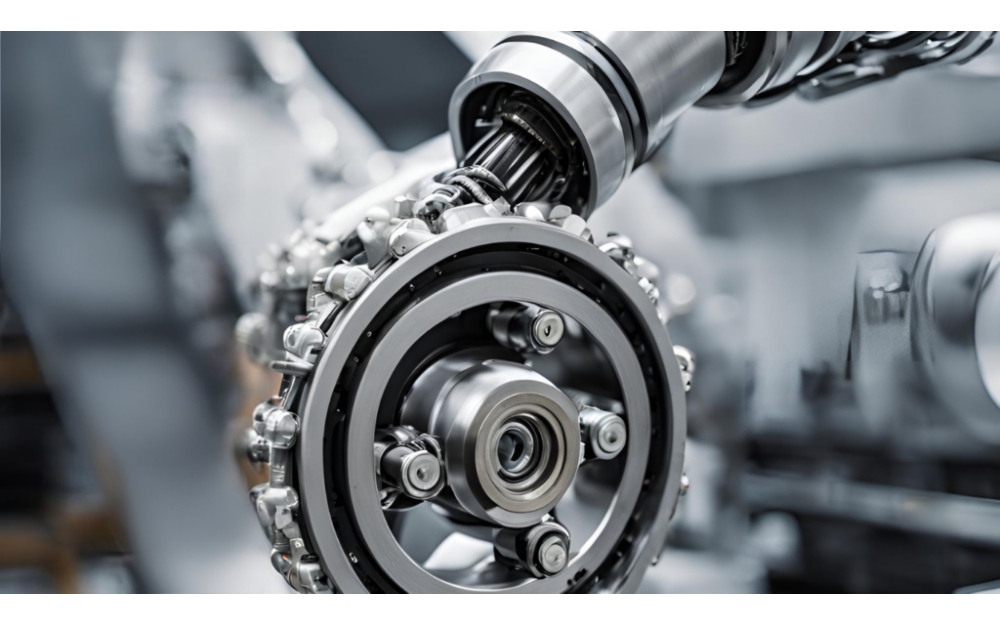 The Bearing Revolution: When Traditional Machinery Meets the Smart Era
 How "Bearing Master" can carry the whole show and make your equipment say goodbye to "emo"!